

Our Supply Chain Agent helps hospital to achieve reduction in device rentals up to 80%.
Key takeaways
- Measurement is the first lever, not a preliminary step. Overall hospital equipment utilization runs as low as 35-40%, and 65% of high-volume devices such as IV pumps go unutilized, on Kontakt.io’s internal analysis. A rental ordered without a utilization check cannot be shown to have been necessary.
- The waste is roughly $1 million per 100 beds a year, and rentals are one line inside it. At a 200-bed hospital, Kontakt.io’s analysis puts about $2.2 million of avoidable annual cost across four lines: staff hours spent searching, late fees on unreturned rentals, under-utilized and over-ordered devices, and outright loss.
- Four of the six levers need no capital decision and no contract cycle. Baselining utilization, right-sizing the fleet, load-balancing across facilities, enforcing return discipline and auditing invoices all come before renegotiation – which only works once real rental volume is known.
- Across Kontakt.io deployments as of 2026, hospitals have cut equipment rentals by up to 80% and raised equipment utilization by 30%. Payback typically falls inside six months.

How much do hospitals overspend on equipment rentals?
Kontakt.io’s analysis of hospital equipment spend puts the waste at approximately $1 million per 100 beds annually. The amount depends on the scale of the hospital and usually consists of: avoidable equipment costs, and rental spend.
The pressure behind those numbers is not hypothetical. The American Hospital Association’s Costs of Caring 2026 report, published in March 2026, found that total hospital expenses grew 7.5% in 2025 – more than twice the rate of growth in hospital prices – and that hospital expenses for supplies rose 9.9%. Rental equipment sits directly in that supply line.
The market side tells the same story. Precedence Research values the US medical equipment rental market at $13.89 billion in 2025, growing to $23.75 billion by 2035 at a 5.51% CAGR, with the hospital segment accounting for 46% of the global rental market in 2025. Renting is not a marginal practice being phased out. It is a growing line item, and most hospitals do not know their true exposure to it.
Why do hospitals rent equipment they already own?
Hospitals rent equipment they already own for four reasons, and all four are visibility failures rather than budgeting failures. Clinical asset management provider TRIMEDX estimates that health systems can misperceive what they spend on rental equipment by as much as 50% – meaning the number in the budget is frequently half the number leaving the building.
The four causes:
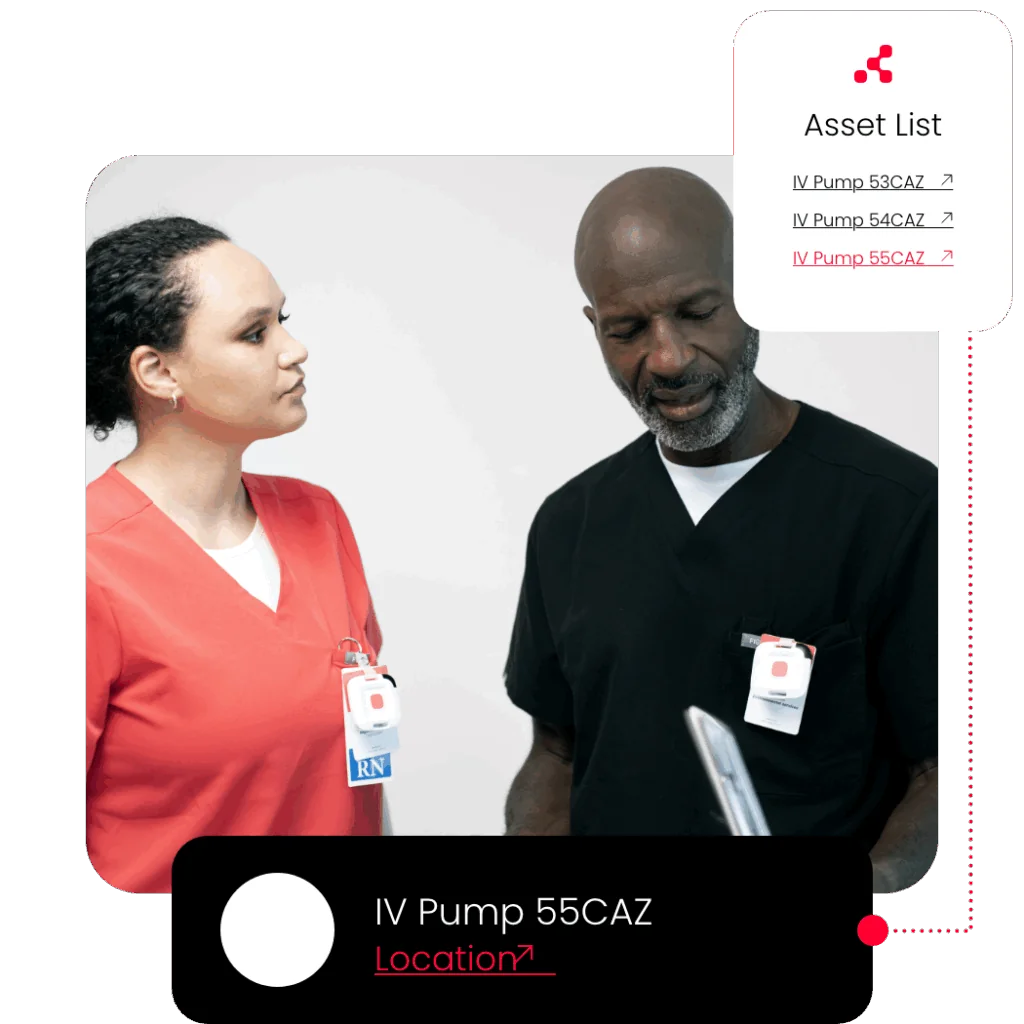
- No system-wide view of what is already on the floor. A device idle in one unit is invisible to the unit three floors up that is about to order a rental. At a multi-site health system, it is invisible to the entire other hospital.
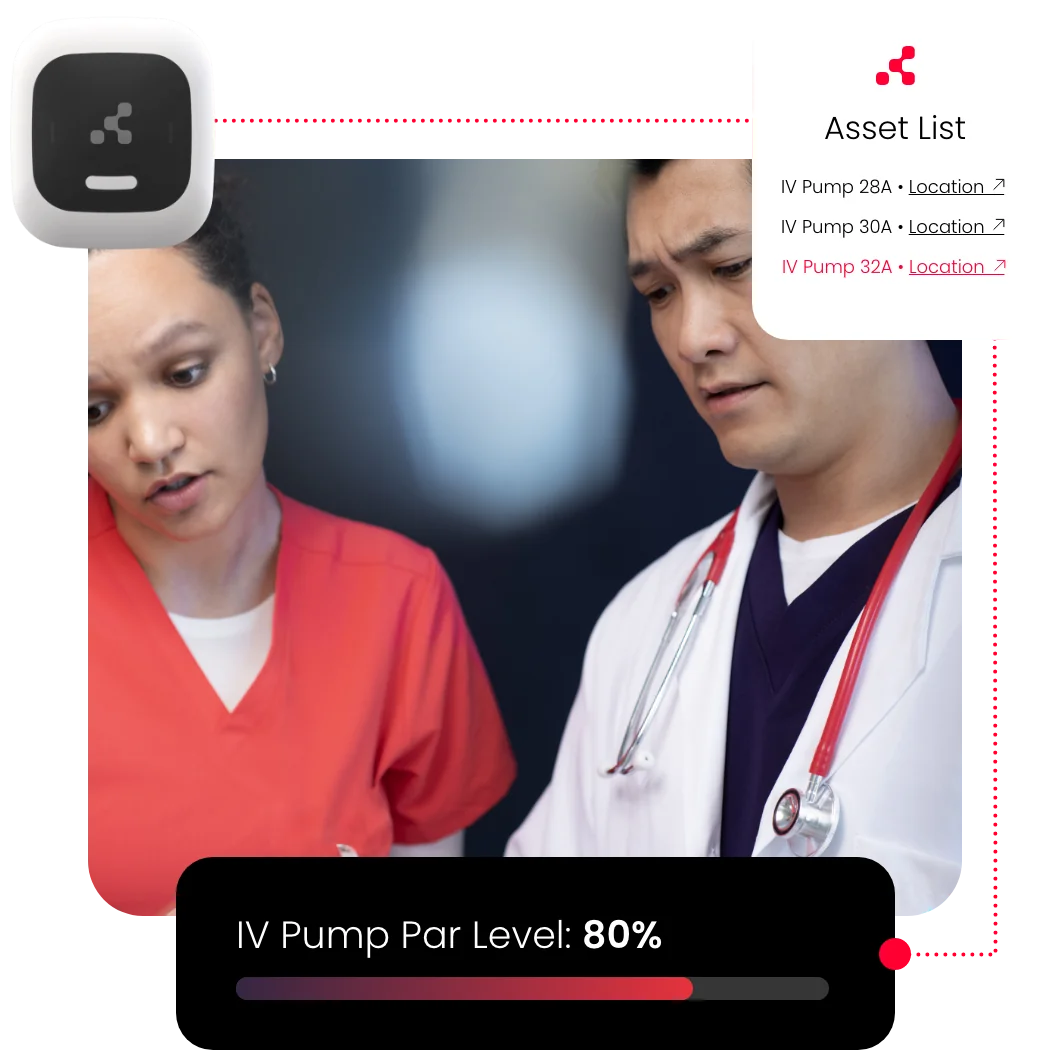
- Unit-level hoarding above par level. Manual inventory systems make it hard to keep each department stocked to actual need, so staff compensate by holding a private reserve. If a nurse finds a stock of commonly used devices, taking a few extra and setting them aside is a rational response to a system that cannot be trusted to supply them. The effect is over-ordering and overspending on inventory that already exists.
- Rentals kept past the date they were needed. Nobody owns the return. Late fees on unreturned rental equipment run to roughly $200,000 a year at the hospitals Kontakt.io has analysed.
- Rental invoices approved without a utilization check against owned stock. The invoice is correct – the equipment was delivered and used. What nobody checked was whether an owned unit was sitting clean and idle in another department at the time.
Underneath all four is a single measurable fact: overall hospital equipment utilization runs as low as 35-40%, according to Kontakt.io’s internal analysis, and 65% of high-volume devices such as IV pumps go unutilized. A hospital operating at 35% utilization is renting against a fleet it is barely using.
How do you measure equipment utilization before cutting rentals?
Equipment utilization is in-use hours divided by available hours for a given device type, measured continuously over a defined baseline period – and it is the only figure that tells you whether a rental was necessary. Target a 30% improvement over your measured baseline; across Kontakt.io deployments as of 2026, that is the improvement hospitals have achieved. Measure before you change anything, or you will have no way to prove the saving.
Four measurements, in order:
Set a baseline period of at least 30 days before acting. A two-week snapshot taken during a census peak will justify rentals you do not need.
At Riverside Healthcare, a 300-bed hospital in Kankakee, Illinois, the measurement produced a number nobody had expected. Staff were spending more than 40 hours a week searching for medical pumps alone – the equivalent of one full-time position.
“When we looked at the data collected by the medical pumps, we discovered that the combined amount of time the staff spent looking for the pumps added up to a full-time staff position.”
– Erik Devine, Chief Information Security Officer, Riverside Healthcare
Six levers that cut hospital equipment rental spend
Six levers reduce hospital equipment rental spend: baseline utilization, right-size the owned fleet, load-balance across facilities, enforce return discipline, audit rental invoices, and renegotiate contracts. They are ordered by operational sequence, which also happens to put the levers you can act on this month ahead of the ones that need a contract cycle.
1. Baseline utilization before you renew a rental
This lever establishes whether the rental is needed at all. Before any renewal is approved, check the utilization rate and physical location of owned units of that device type. If owned units are idle, the renewal is not a supply decision – it is a search-failure decision. See the measurement method above.
2. Right-size the owned fleet to real demand
This lever cuts avoided purchases and avoided rentals at the same time. Once utilization is known, fleet size can be matched to actual peak demand rather than to worst-case assumption.
The arithmetic is checkable. An average IV pump costs approximately $3,500 to purchase. A hospital that avoids buying 100 pumps it does not need saves $350,000 in capital ($3,500 × 100). On a per-bed basis, Kontakt.io’s analysis of IV pump utilization at a 200-bed hospital shows savings of roughly $2,000 per bed per year – $400,000 annually at that size ($2,000 × 200).
Right-sizing cuts rentals as well as purchases, because a correctly sized fleet has slack at peak instead of a shortfall that gets filled by a rental order.
3. Load-balance equipment across facilities
This lever cuts rentals by moving idle stock rather than buying or renting more. It applies to multi-site health systems and IDNs only – a single standalone hospital has nowhere to balance to.
The pattern it eliminates is the most wasteful one in the whole list: one facility renting a device type while another facility in the same system has owned units sitting idle. Inter-department sharing is the same mechanism at smaller scale. When one department runs low, it locates a surplus in another department instead of raising an order.
4. Enforce rental return discipline
This lever kills late fees, and it is the fastest of the six to act on because it requires no capital decision and no contract renegotiation. Late fees on unreturned rental equipment cost roughly $200,000 a year in Kontakt.io’s analysis.
Assign a named owner for every rental with a return date, and alert on the date rather than on the invoice. A rental that is tracked cannot quietly become a permanent cost.
5. Audit rental invoices against owned stock
This lever catches the rentals of equipment the hospital already had on site. Reconcile each rental line against the utilization record for that device type over the rental period. Where owned units were idle, the rental was avoidable – and that finding is what justifies changing the ordering process rather than just the invoice.
6. Renegotiate rental contracts and vendor terms
This lever reduces unit cost once real volume is known – and it only works in that order. A hospital that does not know its true rental volume cannot negotiate against it.
Once levers 1-5 have produced a defensible volume figure, that figure is the negotiating position: actual device-days by type, seasonality, and the share of rentals that turned out to be avoidable. Ask for term pricing against measured volume, an explicit late-fee structure, and return confirmation in writing.
Should a hospital rent, lease or buy assets?
Rent when the need is short, bounded and genuinely exceeds a correctly sized owned fleet; buy when utilization data shows sustained demand; and treat a long-running rental as a signal that the fleet is wrong, not that the rental is right. The decision is only sound after utilization is known – before that, every rental looks justified.
Renting is the correct decision in four situations:
- Short-duration demand peaks – census surges, seasonal respiratory volume, a unit temporarily offline for construction
- Trialling a device class before committing capital to a purchase request
- Specialty equipment needed for a small number of cases per year, where ownership never reaches viable utilization
- Bridging a known replacement cycle between disposal and delivery
Renting is a symptom rather than a decision when the same device type is rented continuously across quarters, when rentals are ordered by units that already hold idle owned stock, or when the rental line grows while measured utilization stays flat.
The financial framing matters to whoever signs off. Rentals sit in operating expense; purchases consume capital budget. In a year when the Kaufman Hall / Strata Decision index put the January 2026 hospital operating margin at 2.1% – against 2.9% for calendar year 2025 across more than 1,300 hospitals – moving spend from capital to operating is not automatically the conservative choice. The AHA’s Costs of Caring 2026 found that reimbursement falls short of the cost of delivering care on approximately 56% of hospital costs. An operating-expense line that grows every quarter is exposed to exactly that squeeze.
What is the ROI of tracking hospital equipment utilization?
Tracking equipment utilization returns value through four measurable lines – avoided rentals, avoided purchases, eliminated late fees, and recovered staff hours – and at a 200-bed hospital those lines sit inside roughly $2.2 million in avoidable annual cost. Payback typically falls within six months, with deployment measured in weeks rather than quarters.
Across Kontakt.io deployments as of 2026, hospitals have cut equipment rentals by up to 80% and raised equipment utilization by 30%. The utilization figure is the one that drives the others: a fleet used 30% harder is a fleet that needs fewer units, generates fewer shortfalls, and triggers fewer rental orders.
What the ROI does not depend on is a large capital outlay. A tracking deployment integrates with existing infrastructure and goes live in weeks or days, which is why payback lands inside a single budget year rather than across several.
What to measure to prove it in your own facility:
- Rental spend by device type, monthly, before and after
- Late fees as a separate line – not folded into rental spend
- Utilization rate per device type against the baseline period
- Purchase requisitions withdrawn after a utilization check
- Staff-hours searching, sampled the same way before and after
If those five are not baselined before deployment, the ROI will be real and unprovable at the same time.

How does asset tracking reduce equipment loss and rental spend?
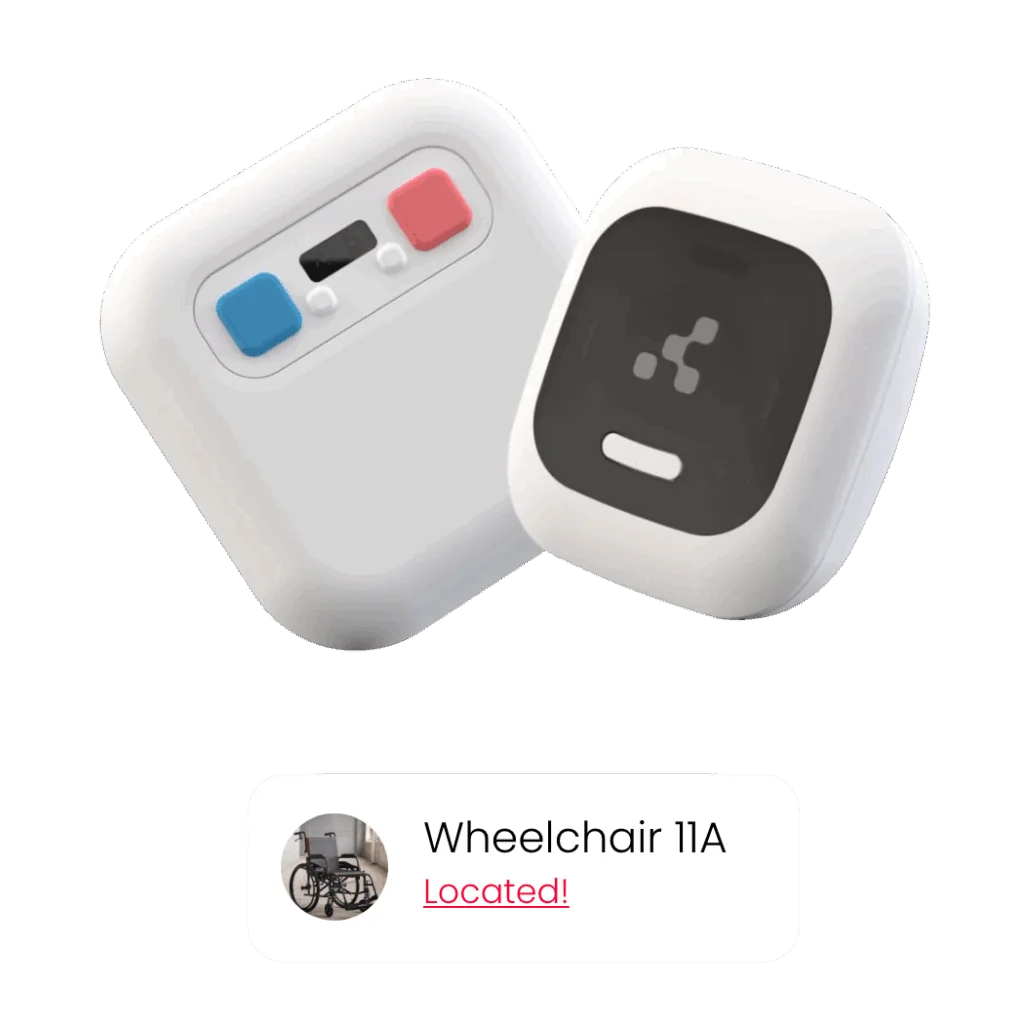
Asset tracking cuts rental spend by making the owned fleet findable, which converts idle equipment from an invisible sunk cost into available supply. A real-time location system (RTLS) using BLE tags and sensors reports the location and status of every tagged asset with room-level accuracy, along with the usage history that the six levers above depend on.
The mechanism is straightforward. BLE tags attach to assets in a range of sizes and formats; sensors read the signals each tag emits; cloud software presents location, status and utilization history on a computer or phone. Coverage extends by adding sensors, and new tagged assets can be added at any time. Tracked asset classes include IV pumps, medical devices, wheelchairs, patient beds, medications and routine supplies.
Five effects reduce rental spend directly:
Tracking also returns clinical time, which is the benefit staff notice first: nurses locate the devices they need instead of walking the floor, and patients move through care with fewer equipment-related delays.
What should hospitals require of an asset rental-reduction platform?
Require utilization reporting at device-type level, rental-versus-owned reconciliation, par-level alerting, multi-site visibility, and integration with the systems that already hold your asset and financial data. These are the questions to put to any vendor, including us.
Two requirements are worth being blunt about. Integration is the question a CIO asks first and the one most vendors answer least specifically – ask for named systems and interface types, not the word “integrates”. And multi-site visibility is what separates a rental-reduction platform from an asset-finding tool. Finding equipment is useful; knowing that Facility B has eleven idle units while Facility A is renting is what removes the cost.
Kontakt.io’s platform integrates with existing infrastructure for deployment in weeks or days, with AI-powered analytics on top of the tracking data. For the supply-and-demand side of this – forecasting device usage and rebalancing fleets across facilities.
